
Phnom Penh: Short-Term vs Long-Term Rental – Which Delivers Better Returns?
Introduction: Why This Question Is Critical in Phnom Penh
In Phnom Penh, most investors make the same mistake:
They copy rental models from Thailand or Bali and try to apply them to a market that works completely differently.
Phnom Penh:
- is not a tourism market
- has no strong high season
- relies on business and expat demand
- rewards stability and punishes instability
That's why the question "short-term or long-term rental?" isn't ideological.
It's pure mathematics of risk, costs, and vacancy rates.
In this article:
- I break down both rental models
- I show real rates and costs
- I calculate net ROI, not brochure figures
- I explain when short-term makes sense and when it kills your returns
Phnom Penh in 30 Seconds – The Key Fact
In Phnom Penh, long-term rental wins in 70–80% of cases if you're calculating investment returns, not emotions.
Short-term rental can work, but:
- only in very specific locations
- with the right unit size
- and with full awareness of higher operating costs
What Rental Demand Looks Like in Phnom Penh (Reality, Not Marketing)
Dominant Tenant Profile
- foreign company managers
- NGO and international institution staff
- diplomats on 6–24 month contracts
- expats with relocation packages
What They're Looking For
- stability
- quiet environment
- security
- good building management
- predictable costs
These are not tourists looking for "views and Instagram-worthy pools."
Demand sources:
- https://www.worldbank.org/en/country/cambodia
- https://www.jica.go.jp/english/
- https://www.knightfrank.com/research
Long-Term Rental in Phnom Penh – The Math
Typical Rates (2025–2026)
Unit TypeCentral LocationMonthly RateStudioBKK1 / Tonle Bassac$550–$7001BRBKK1 / Chamkarmon$800–$1,1002BRBKK1 / Riverside$1,300–$1,800
Sources:
Operating Costs – Long-Term Rental
Management
- 8–12% of rent (typically 10%)
- for contracts >12 months, sometimes 0% for corporate tenants
Maintenance Fee
- $0.80–$1.50 / sqm / month
- (e.g., 60 sqm → $50–$90)
Repairs and Reserve
- 5–7% of annual rent
Vacancy
- realistically: 0.5–1 month / year
Example Calculation (1BR, 60 sqm)
- Purchase price: $150,000
- Rent: $950 / month
- Annual gross income: $11,400
Annual Costs
- Management (10%): $1,140
- Maintenance: ~$900
- Repair reserve: ~$600
- Vacancy (1 month): ~$950
Net income: ~$7,810
Net ROI: ~5.2%
➡️ stable, predictable, defensive
Short-Term Rental – Promise vs Reality
Short-term rental in Phnom Penh is not tourism-based, but relies on:
- short business contracts
- business delegations
- 1–4 week stays
Typical Daily-Monthly Rates
- Studio: $45–$65 / night
- 1BR: $60–$90 / night
Sources:
Occupancy – Real, Not Advertised
- Annual average: 45–55%
- No "peak" season like Thailand
- Weekly fluctuations, not seasonal
Short-Term Costs (Where ROI Disappears)
Management
- 20–30% of revenue (!)
Cleaning
- $20–$30 / stay
- realistically $800–$1,200 / year
Utilities
- higher consumption: +25–40%
Marketing / OTA
- 12–18% commission
Wear and Tear
- furniture, appliances, AC depreciate faster
The Most Common Myth About Phnom Penh
"Short-term always delivers higher ROI"
In Phnom Penh very often:
- gross is higher
- net is lower
- risk is significantly greater
3 Facts You Must Know
- Phnom Penh is a contract market, not a tourism market
- Short-term costs are structurally higher
- Stability beats rate ambition
Short-Term Rental in Phnom Penh: Numbers, Not Promises
Short-term rental in Phnom Penh looks attractive mainly on marketing slides. In practice, it's an operational model, not passive income. It works, but only under very specific conditions.
Who Actually Rents Short-Term in Phnom Penh
Short-term rental in Cambodia's capital relies mainly on:
- expats on project assignments (NGOs, banks, developers),
- regional consultants (ASEAN),
- business trips 5–21 days,
- very limited tourism segment (Phnom Penh ≠ Siem Reap).
This means lower seasonality than resort markets, but also a lower price ceiling.
Real Short-Term Rates (2025/2026)
For central districts (BKK1, Tonle Bassac, Daun Penh):
- Studio: $35–$55 / night
- 1BR: $45–$70 / night
- 2BR: $65–$95 / night
Rate sources:
Real Occupancy (Not Brochure Figures)
Average annual short-term occupancy in Phnom Penh:
- 45–55% for well-managed units
- above 60% only with aggressive pricing and high guest churn
That's 160–200 nights annually, not 300.
Short-Term Operating Costs (OPEX)
This is where ROI typically "escapes":
- Management: 20–30% of revenue
- Cleaning: $25–$40 / stay
- Utilities (AC, water, internet): $120–$180 / month
- Wear and tear reserve: 5–8% of revenue
- Platforms (Airbnb/Booking): 3–5%
Numerical Model – Short-Term (1BR, BKK1)
Assumptions:
- Purchase price: $120,000
- Rate: $60 / night
- Occupancy: 50% (183 nights)
Gross revenue:
60 × 183 = $10,980 / year
Costs:
- Management 25%: −$2,745
- Utilities: −$1,800
- Cleaning: −$1,200
- Reserve: −$700
- Platforms: −$400
Net income:
≈ $4,135
Net ROI:
≈ 3.4%
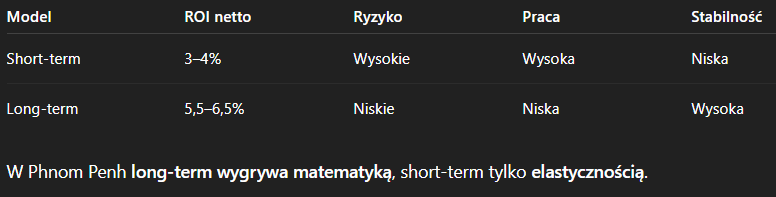
Short-term works operationally, but doesn't maximize ROI in Phnom Penh.
Long-Term Rental: Quiet Math, Better Stability
Long-term rental is the backbone of the Phnom Penh market. It's not sexy, but it's predictable.
Who Rents Long-Term
- expats on 6–24 month contracts
- management staff
- international organization employees
- companies renting for their staff
This segment is less price-sensitive, but very sensitive to location and standard.
Real Long-Term Rates (2025/2026)
- Studio: $450–$650 / month
- 1BR: $650–$900 / month
- 2BR: $900–$1,300 / month
Sources:
- https://www.realestate.com.kh/
- https://www.knightfrank.com.kh/
- https://www.cbre.com/insights/figures/asia-pacific
Long-Term Costs
- Management: 8–12%
- Utilities: often covered by tenant
- Vacancy: 1–2 months / year
- Wear and tear: significantly slower
Numerical Model – Long-Term (1BR, BKK1)
Assumptions:
- Purchase price: $120,000
- Rent: $800
- Vacancy: 1 month
Gross revenue:
800 × 11 = $8,800
Costs:
- Management 10%: −$880
- Repair fund: −$600
Net income:
≈ $7,320
Net ROI:
≈ 6.1%
Side-by-Side Comparison (No Marketing Spin)
 The Most Common Myth
"Short-term always delivers higher ROI"
Not in business cities.
This is a myth imported from Phuket and Bali.
3 Facts You Must Know – Phnom Penh
- Phnom Penh is a residential market, not a tourism market
- Stability > maximum rate
- Long-term builds better net cash flow
Investor Checklist (5 Points)
- Are you calculating ROI after all costs?
- Do you know real occupancy, not declared figures?
- Is OPEX eating your short-term returns?
- Do you have a vacancy plan?
- Does your model fit the city, not your dream?
Summary
In Phnom Penh, it's not the highest rate that wins,
but the most stable rental strategy.
Short-term is a tool.
Long-term is a foundation.
Get personalized property recommendations
Our advisor will prepare a selection of properties matching your criteria and budget.
- 3-5 hand-picked properties matching your criteria
- Full cost analysis and investment potential overview
- Free consultation with a dedicated advisor