
Short-Term Rentals in Thailand: What Is Legal in a Condo or Villa
Can you legally rent out an apartment or villa in Thailand by the night? In short: a rental of less than a month is in principle running a hotel, and a condominium adds a separate ban. Small properties, villas in particular, have a notification route, and the law is being reformed. Below we describe it from the texts of the laws and from 2025-2026 articles, with no promises about financial results.
We are an international real estate agency with offices in Thailand and Cambodia. Some sources are unofficial and the reform is under way, so confirm the legal position with a Thai lawyer before you plan nightly lets. Data as of 18.11.2026.
Short-term rentals in Thailand: the short answer
- Under a month is a hotel. The Hotel Act of 2004 excludes from the definition of a hotel only accommodation at a monthly rate or more, so shorter paid stays need a licence unless the property fits an exemption.
- A small property has a notification route. Under the 2023 regulation, up to 8 rooms and 30 guests need no hotel licence, but the property must be notified (Airbnb, SILQ Law).
- A condo has an extra barrier. The Land Department's position is that condominium units cannot be used for hotel operations, and owners associations often ban nightly lets in their house rules.
- Penalties are real: up to one year in prison or 20,000 THB, plus up to 10,000 THB for every day of the breach.
- Reform is under way: a draft Accommodation Establishment Act was set out on 29.09.2026, with no entry-into-force date.
What the Hotel Act of 2004 says
The definition in section 4 says a hotel is a premises run for business that provides temporary accommodation to travellers or others for payment. Among the exclusions is accommodation offered at a monthly charge or more. Section 15 bans operating a hotel without a licence, and section 59 sets a penalty of up to one year in prison or a fine of up to 20,000 THB (about 540 EUR), or both, plus a fine of up to 10,000 THB (about 270 EUR) for each day the breach continues. Source: the unofficial translation prepared for the Council of State, which has no legal force, so the Thai text decides.
In practice this means that lets by the day or week, including through booking platforms, are a hotel activity. Monthly and longer lets fall outside the definition of a hotel.
The 2023 regulation and the notification route
According to the Airbnb help page, Ministerial Regulation (No. 2) of 2023 exempts from the hotel licence properties of up to 8 rooms and 30 guests that offer temporary paid accommodation, provided the host reports the activity to the local authorities. SILQ Law of 6.10.2026 describes this route as notifying the registrar and passing an inspection.
Older articles give a lower threshold: 4 rooms and 20 guests (Thailand Business News, updated 08.12.2025). It shows how quickly descriptions date, so do not rely on thresholds from memory and check the current rules with the local office. Also remember that a foreigner running such a business must check the Foreign Business Act, as Airbnb points out.
Condos: a separate barrier, independent of any licence
In a condominium three things block short lets at once. First, the Land Department's position is that condominium units cannot be used for hotel operations (SILQ Law, 6.10.2026). Turning a building into a hotel requires cancelling the condominium registration, which the same source says is rarely possible, since it needs either the developer acting before the units are sold or a unanimous vote of co-owners. Second, the Condominium Act bans commercial trading in the building outside the designated commercial area (section 17/1), with a fine of up to 50,000 THB (about 1,340 EUR) and up to 5,000 THB per day (section 65, translation of the Act). Third, owners associations often ban nightly lets in their house rules and enforce this with lobby notices and fines (Thailand Business News).
This means that even with a licence or notification you cannot legalise nightly lets in a condo without the building's agreement. That is why, when buying a condo, you should assume that nightly letting is risky and often prohibited by the house rules. We cover the role of the owners association in a separate post on the juristic person, and how to check a building before buying in our post on due diligence in 7 steps.
| Property type | Rental under a month | Rental of a month or longer |
|---|---|---|
| Condo | Banned by law and house rules, risk of fines | Allowed unless the house rules add limits |
| Villa or house, up to 8 rooms and 30 guests | Notification route under the 2023 regulation | Ordinary residential lease |
| Larger property | Hotel licence | Ordinary residential lease |
Enforcement: courts and practice
Thailand Business News describes a 2018 Hua Hin court ruling that held unlicensed short-term letting to violate the Hotel Act, noting that rulings are not universally binding. The same article calls enforcement inconsistent. In the 2026 sources we checked we found no confirmed specific enforcement campaigns, so we do not describe a "crackdown" or give figures. That does not mean there is no risk: an owners association, a neighbour or an authority can react at any time, and the penalty falls on the owner of the unit.
In short-term lets the host must also report foreign guests within 24 hours with the TM30 form or online, and the fine can reach 2,000 THB (about 54 EUR) according to Airbnb and Thailand Business News.
The 2026 reform: what is certain and what is not
In July 2026 the House of Representatives accepted in principle two bills amending the Hotel Act (one from the government, one from a Bhumjaithai MP) and sent them to committee (Explera, 27.09.2026). On 29.09.2026 the government set out a draft Accommodation Establishment Act with three categories, of which category 1 (up to 8 rooms and 30 guests) would need notification only (SILQ Law). There is no entry-into-force date, and the bill must still pass further readings, the Senate, royal endorsement and publication.
The key point for condo owners: according to SILQ Law the draft leaves the Land Department's position unchanged that hotel operation in condominiums is not allowed, so the reform changes little for individual unit owners. Explera, by contrast, writes that the rules for condos in the various versions are unclear (some versions mention the building's consent) and advises not quoting thresholds to clients until the text is published. Until the new law takes effect, the Hotel Act of 2004 applies.
Conversions: NBP rate of 17.11.2026, 1 EUR = 37.19 THB.
What this means when you buy
- If you buy a condo, assume monthly or longer leases unless the building clearly holds a hotel licence.
- If you buy a villa, check the number of rooms and guests against the 8 and 30 limits, and the local zoning.
- Ask for the building or estate rules and read the clauses on rentals.
- Do not base a purchase on the assumption that nightly lets will be possible, and check rental taxes in our post on rental tax in Thailand.
- For how the Airbnb market works in Phuket see our post on short-term rental in Phuket.
Our base (as of 18.11.2026) holds 199 villa projects in Phuket, 49 villas on Koh Samui and 135 condo projects in Phuket. See Phuket villas, Koh Samui villas and Phuket condos.
Frequently asked questions
Is Airbnb legal in Thailand?
The platform is available, but the host is responsible for complying with the law. A stay under one month is in principle a hotel business, and small properties up to 8 rooms and 30 guests may use the notification route. In a condo the ban on trading in the building and the Land Department's position also apply.
What is the penalty for nightly lets without a licence?
For operating a hotel without a licence, section 59 of the Hotel Act provides up to one year in prison or a fine of up to 20,000 THB, or both, plus up to 10,000 THB for each day of the breach. In a condo the owners association can add its own penalties under the house rules.
Will the 2026 reform legalise nightly lets in condos?
Not as things stand. The draft Accommodation Establishment Act of 29.09.2026 has no entry-into-force date, and according to SILQ Law it leaves the Land Department's position on hotel operation in condominiums unchanged.
Is a monthly rental legal in a condo?
Generally yes. The Hotel Act excludes accommodation at a monthly rate or more from the definition of a hotel, so an ordinary residential lease is allowed unless the building's house rules add limits.
Planning a rental in Thailand?
We can show units and villas with clear rental rules and check the building's house rules before you buy. Write to us via the contact page. This text is general information, not legal or tax advice, and you should consult an independent lawyer in Thailand before deciding.
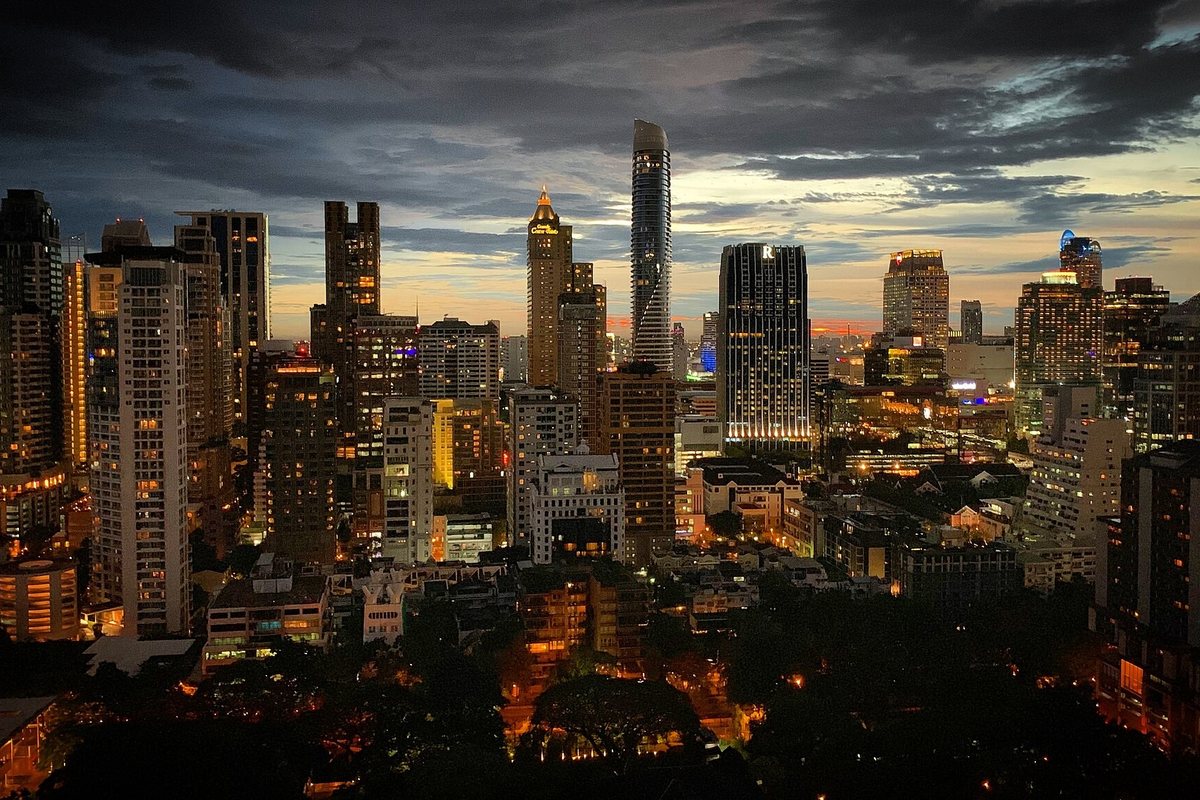
Cover photo: Phong Phat G, CC BY-SA 3.0, Wikimedia Commons.